
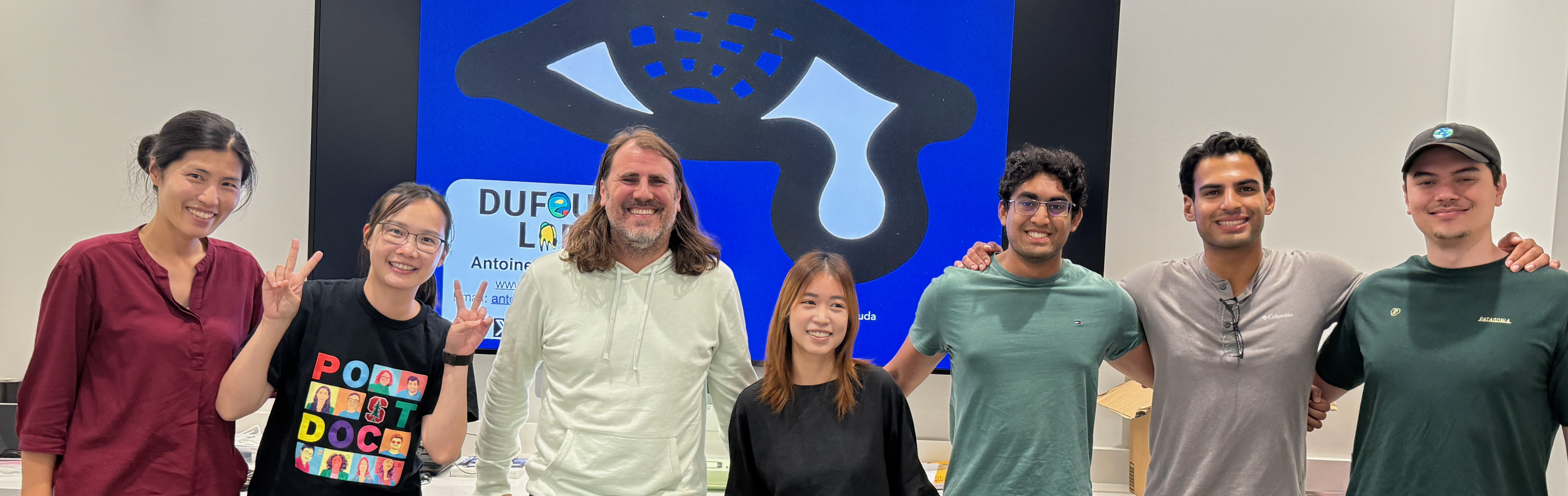
Palo Alto, CA — When Antoine Dufour Ph.D., professor of physiology and pharmacology at the University of Calgary, spent a six-month sabbatical in the Mahajan Lab at Stanford, he plunged into collaborative research with Vinit Mahajan M.D., Ph.D., Stanford professor and vice chair of ophthalmology research, and his team.
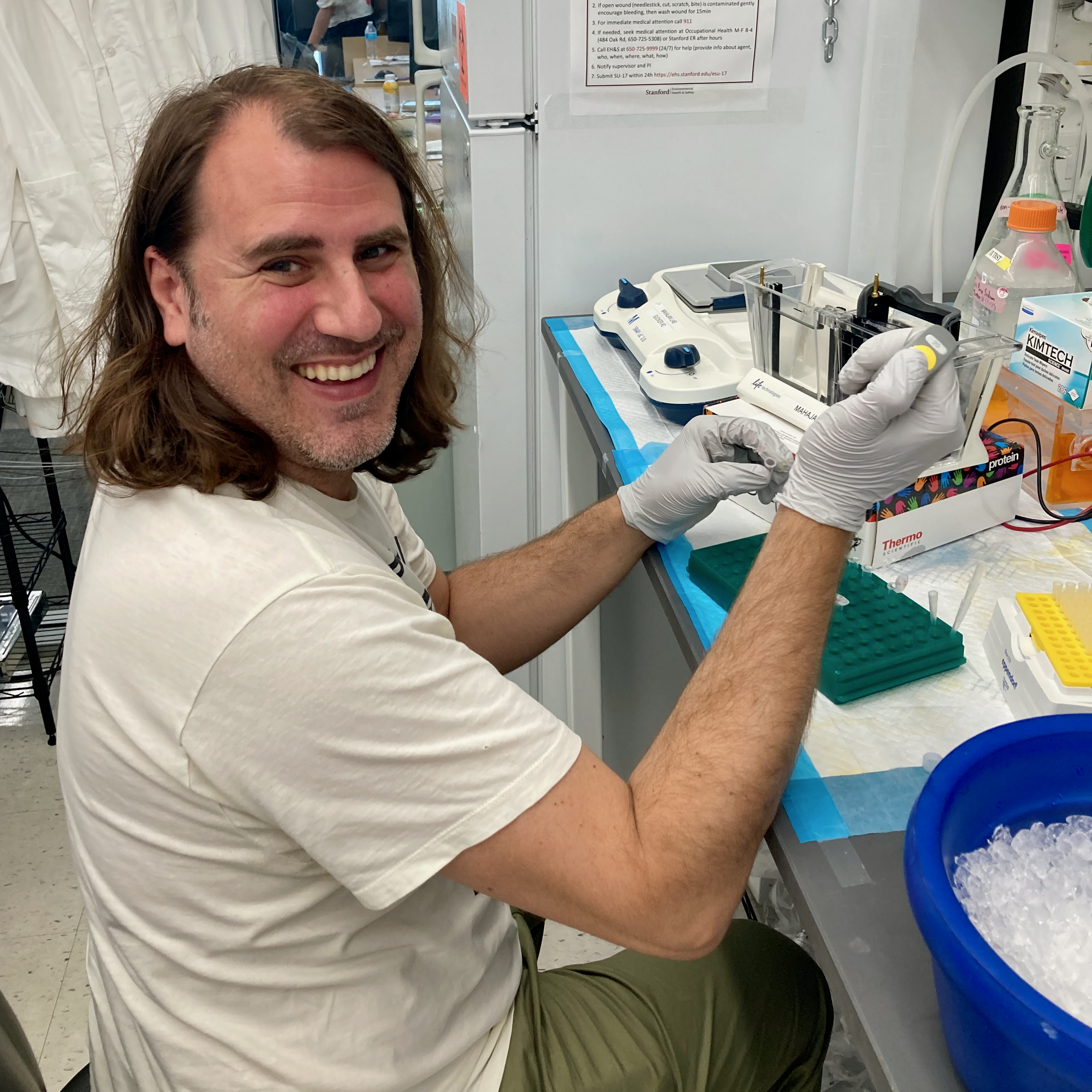
Mahajan said, “Tony and I have had an incredibly productive scientific relationship, and I’m lucky to also call him a friend. I knew bringing him to lab would be transformative for not only our science but also for my lab members. Tony has a wealth of knowledge to share and having him in lab was a natural extension of the collaborative team building we have been doing for several years now.”
Mahajan and Dufour have launched projects using “liquid‑biopsy proteomics,” a groundbreaking method that analyzes tiny fluid samples from the eye to uncover protein fingerprints of retinal disease and aging. Their work has shed light on how proteins shift during vision loss, paving the way for earlier diagnoses and more precise treatments.
During his sabbatical, Dufour presented a seminar in Stanford’s Mass Spectrometry Seminar Series titled “Keeping up with the TEMPO in the Omics era” where he shared how advanced proteomic tools can trace proteins back to their cellular origins. He also mentored junior scientists, expanding his impact beyond the bench.
Colleagues and students consistently comment on Dufour’s positivity and generosity as a mentor. He believes that scientific exploration should be both rigorous and joyful, encouraging his team to approach discovery with curiosity, creativity, and delight.
Project leader and senior scientist in the Mahajan Lab, Soo Hyeon Lee Ph.D. said, “Tony is not only a brilliant scientist with remarkable insights but also a supportive mentor who encourages colleagues and students. Working with him is always a pleasure thanks to his warmth and humor.”
Tony’s artistic sensibility also infuses his work; he sees science through the lens of art, intentionally blending imagination and precision. By merging a passion for art with his scientific endeavors, he inspires others to view experimentation as both a discipline and a creative act.
Like other lab members, postdoctoral fellow Tsai-Chu Yeh M.D., was impressed with Dr. Dufour.
Chu said, “He never hesitates to share his experience, whether it’s something small, like how to design a clear and effective figure, or something complex as analyzing large and intricate datasets. No matter how many projects he has on his plate, Tony is always willing to pause, listen, and help us brainstorm through challenges. Working with him feels like having an endless treasure chest of knowledge and creativity by your side, you never walk away without learning something new.”
Lab member Joel Franco appreciated the scientific feedback and guidance he received from Dr. Dufour.
Joel said, “When Tony wasn’t assisting me with designing my experiments or teaching me the theory behind complex biochemical methodologies, he was having lunch with me and showing me how to play one of his favorite card games. His passion for science and gamesmanship was plenty evident, but so was his humor. Tony brought with him an energy that made everyone around him joyful.”
Back in Calgary, Dufour leads a lab dedicated to understanding how enzymes cut and reshape proteins, a process central to inflammation, arthritis, brain disorders, and other chronic diseases. While the science is technical, its real‑world potential is profound: discovering new avenues to treat conditions affecting millions.
Mahajan said, “Tony’s work has earned him wide recognition. He has published broadly, secured major research funding, and holds patents for therapeutic technologies. Honors such as Calgary’s Top 40 Under 40, the Canadian Society for Mass Spectrometry’s Young Investigator Award, and the Groll Calpain Award reflect his scientific leadership and the translational promise of his research.”
Dufour was sponsored in part by the Alan Alder Ocular Oncology Research Center for Ocular Oncology directed by Prithvi Mruthyunjaya M.D., M.A., professor of ophthalmology at Stanford University.
Mahajan added, “We’ve published over eight papers together, recently on the TEMPO method, and now on a number of current and upcoming studies on eye cancer with ocular oncologist Prithvi Mruthyunjaya M.D., M.A.”
“It is great to have Tony on zoom, but in person is even better,” Mahajan said. “And one big reason why was because his wife Kelly and baby Alice were with him in town. Those two superstars were a big add to the positive vibes!”