
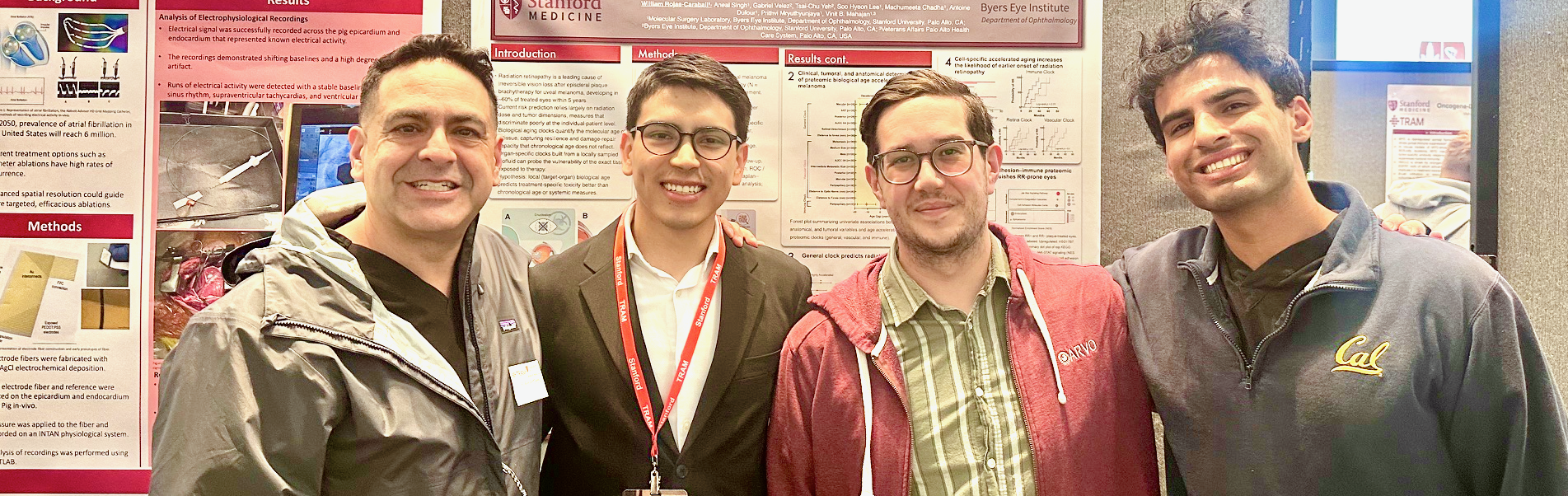
Palo Alto, CA — The Mahajan Lab is proud to celebrate William Cabralli, a medical student from Columbia University who recently earned his Master of Science in Translational Research and Applied Medicine (M-TRAM) degree from Stanford University. William's dedication and exceptional promise were recognized with the prestigious Stanford Knight Hennessy Scholarshi, one of the most competitive graduate fellowships.
 The M-TRAM program is a unique one-year intensive training experience designed to bridge the gap between scientific discovery and clinical application. Drawing on Stanford Medicine's exceptional expertise in medicine, technology, and business, M-TRAM is the only early translational program of its kind on the West Coast. The program equips future leaders with the skills needed to translate research breakthroughs into real-world medical solutions, developing, implementing, and leading the translation of research discoveries into biomedical innovations.
William presented a poster at the TRAM symposium where students engaged in a day of scientific seminars and posters, sharing their work and hearing from faculty speakers. The day culminated with students receiving their degrees.
Vinit Mahajan M.D., Ph.D., professor of ophthalmology at Stanford University and vice chair for research said, "We are very lucky William joined the lab. He is a diligent and accomplished computational biologist who learned a great deal working alongside our team. We're excited that he'll be spending another year with us!"
Clinical Training and Research Excellence
William completed his clinical rotation in ophthalmology with Prithvi Mruthyunjaya M.D., M.S., professor of ophthalmology and director of the Alan Adler Ocular Oncology Center, gaining invaluable clinical exposure to the real-world challenges facing patients with eye cancer. This hands-on experience informed his research perspective and deepened his commitment to becoming a physician-scientist. The clinical rotation provided him with essential insights into how computational approaches and biomarker discovery can directly address patient needs and improve clinical outcomes.
Mruthyunjaya said, "William demonstrated exceptional dedication and insight during his rotation. His ability to connect computational approaches with clinical questions will serve him well as he develops into a physician-scientist.”
Through M-TRAM, William gained critical competencies in applying clinical specimens to emerging technologies like single-cell omics and biomarkers, designing pre-clinical and clinical studies, developing product development plans encompassing regulatory, manufacturing, and clinical modules, and identifying unmet medical needs while developing testable medical hypotheses.
Advancing Computational Biology for Eye Disease
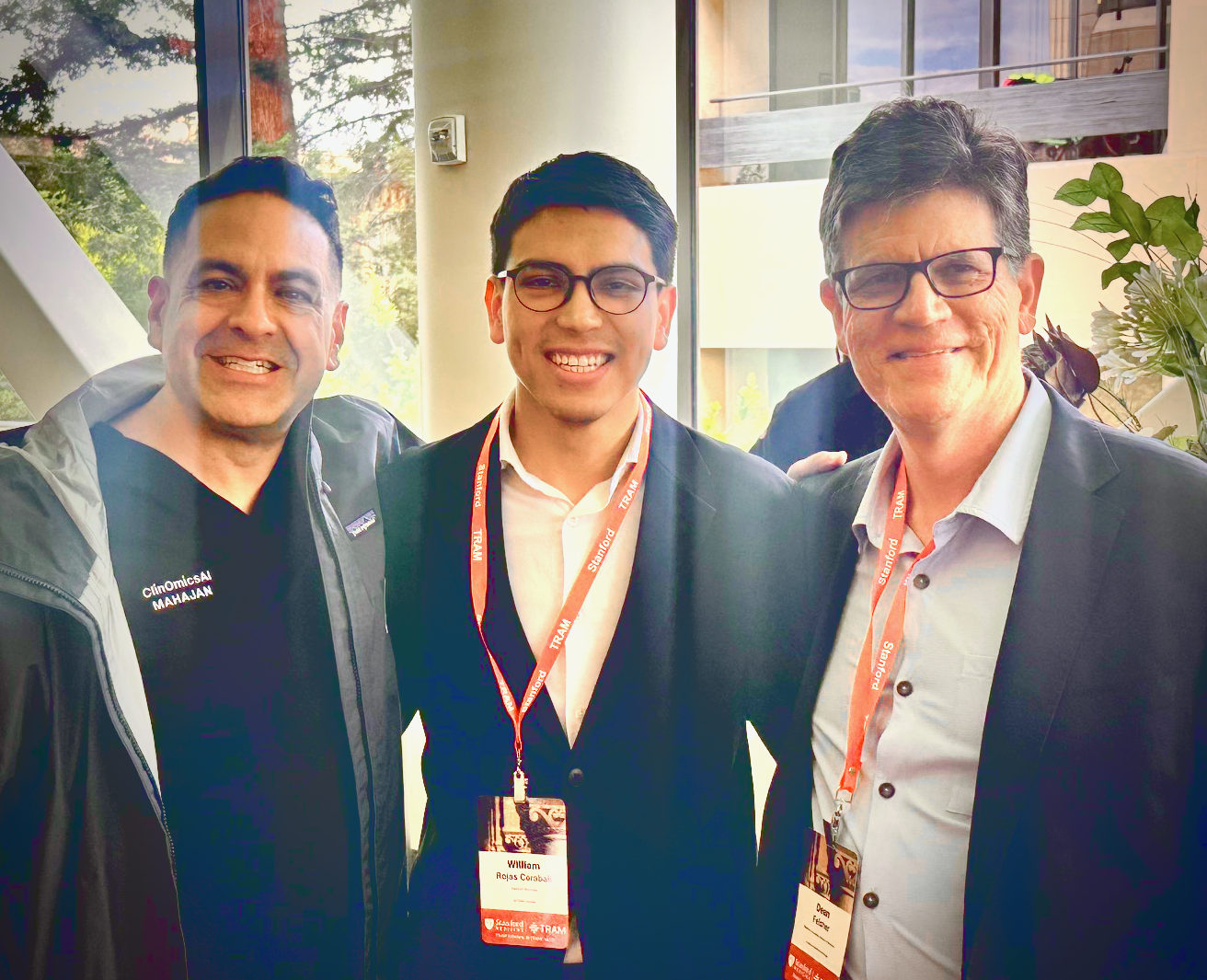
While at Stanford, William applied his exceptional talents as a computational biologist to critical areas of eye health and disease.
He said: "I am particularly interested in AI, multiomics integration, molecular diagnostics, and immune therapy. My work in the Mahajan lab focused on integrating advanced computational tools for multiomics data to develop predictive models and biomarkers for eye cancer. These approaches have the potential to improve diagnostic precision and inform targeted treatments."
Williams research focused on the intricate biological clocks within the eye, studying them in both human and animal models used to understand ocular conditions. Specifically, William investigated how biological aging within the specific organ affected various types of eye cancer and its consequences. His focus on AI-driven multiomics integration, predictive modeling, and biomarker development represents the future of precision medicine in ophthalmology.
Mahajan said, “What makes William's work particularly exciting is its translational potential. By integrating multi-modal computational approaches with mechanistic insights from both human tissue and animal models, his research exemplifies the kind of tool development and data integration that drives modern biomedical discovery.”
Understanding the molecular pathways of ocular aging, cancer, and inflammatory conditions not only advances vision research but also holds promise for understanding similar processes in other organs, recognizing that many biological mechanisms are shared across tissues and disease states. This cross-disciplinary relevance opens doors for drug repurposing and broader impact across health, medicine, and science, extending NEI-supported research beyond vision to conditions affecting the heart, lungs, kidneys, and cancer.
Looking Forward
William will continue working with the Mahajan Lab on his year-long capstone research project, where he will further develop AI and computational approaches to advance our understanding of ocular inflammatory diseases and develop novel diagnostic and therapeutic strategies. His combination of clinical insight, computational expertise, and translational training positions him perfectly to make meaningful contributions to precision medicine and improve outcomes for patients with vision-threatening conditions.