
Palo Alto, CA — From the simplest sea algae orienting themselves toward the sun to the complex sight of the human eye, life has evolved an elegant solution for sensing light: proteins called opsins. These molecules are nature’s fundamental tool for turning light into a biological signal. The tragedy in many forms of blindness, such as late-stage retinitis pigmentosa, is the loss of the photoreceptor cells that house these critical opsin proteins. The retinal wiring often remains, but the light sensors are gone.
But what if we could teach old cells new tricks? This question is now yielding concrete answers in the clinic. At the 2026 Association for Research in Vision and Ophthalmology (ARVO) annual meeting, Vinit B. Mahajan, M.D., Ph.D., professor of ophthalmology at Stanford University and vice chair for research, presented data that represents a major step forward. He shared the three-year results from Nanoscope’s completed Phase 2b/3 optogenetic clinical trial for MCO-010, which showed a remarkable and lasting restoration of vision in patients with profound blindness.
The results addressed the three most important questions for any new therapy: does it work, is it safe, and does it last? Patients who were legally blind, with vision limited to only light perception or hand motion, experienced an average improvement of an equivalent 3-lines on a standardized reading chart, with some individuals gaining as much as 6-lines. This is the kind of improvement that can mean the difference between navigating a room and recognizing a loved one's face. Importantly, these gains held strong over the entire three-year follow-up period, and the treatment was shown to be safe. With its successful Phase 2b/3 trial completed, Nanoscope has begun the FDA approval process and initiated a rolling Biologics License Application (BLA).
Mahajan explained, “The science is both innovative and intuitive. Normal human vision uses four light sensing proteins called opsins, but many blind patients lose the photoreceptor cells and the opsin proteins with them. Optogenetics replaces the lost opsins with a bioengineered light-sensing protein.”
The therapy doesn't try to regrow lost cells; instead, it installs a new light-sensing capability into the surviving inner retinal cells. The therapy targets bipolar cells, which are better connected to the retina's communication network. Scientists believe this may allow for a clearer, more detailed signal to be sent to the brain.
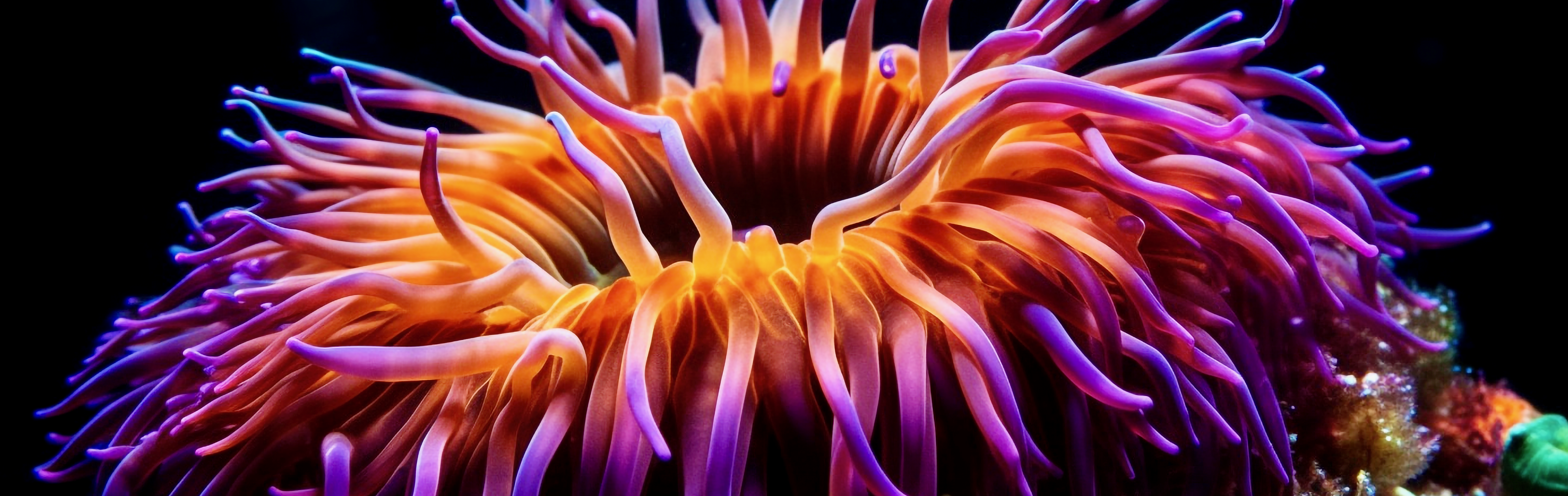
The scientists at Nanoscope created a synthetic protein from parts that came from the light-sensing proteins in sea anemones and ocean algae. These were delivered by gene therapy into patients.
Mahajan emphasized, “The origin of this new synthetic light sensor is a triumph of bioengineering. This special “synthopsin” was designed to work in normal room light, freeing patients from the need for light-amplifying goggles required by other approaches.”
Dr. Mahajan concluded, “It’s remarkable to think that the journey to restoring human sight began, in part, with a question about how a simple sea anemone senses light. This is the essence of mechanism-driven research. When the US invests in research to understand the fundamental building blocks of life, whether in an ocean creature or a human cell, we uncover a universal toolkit. That knowledge allows us to then engineer new tools to repair what’s broken. The path from a sea anemone to a patient seeing their family again shows that the deepest scientific understanding leads to the most profound human healing.”
Click here for patient resources on optogenetics from Nanoscope Therapeutics, Inc. Mahajan is an advisor to Nanoscope Therapeutics, Inc.