
Palo Alto, CA – A new paper provides compelling insights into the emerging role of mast cells in various diseases, including eye diseases.
Vinit Mahajan M.D., Ph.D., professor of ophthalmology and vice chair for research at Stanford University's Byers Eye Institute, said, "This review is an impressive synthesis of current knowledge and highlights the critical importance of mast cells, not only in allergic and inflammatory responses but also in their broader implications in diseases, providing a solid foundation for future research in therapeutic approaches."
Mast cells are a type of immune cell that reside in various tissues throughout the body, playing vital roles in allergic responses and tissue homeostasis and acting as sentinels that detect and respond to environmental threats.
Antione Dufour Ph.D., professor in the Departments of Physiology & Pharmacology and Biochemistry & Molecular Biology and scientific director of the Southern Alberta Mass Spectrometry (SAMS) core facility at the Cumming School of Medicine, University of Calgary, emphasized that "mast cells are becoming increasingly recognized as important players in disease," noting their potential as therapeutic targets in conditions such as allergic conjunctivitis and age-related macular degeneration.

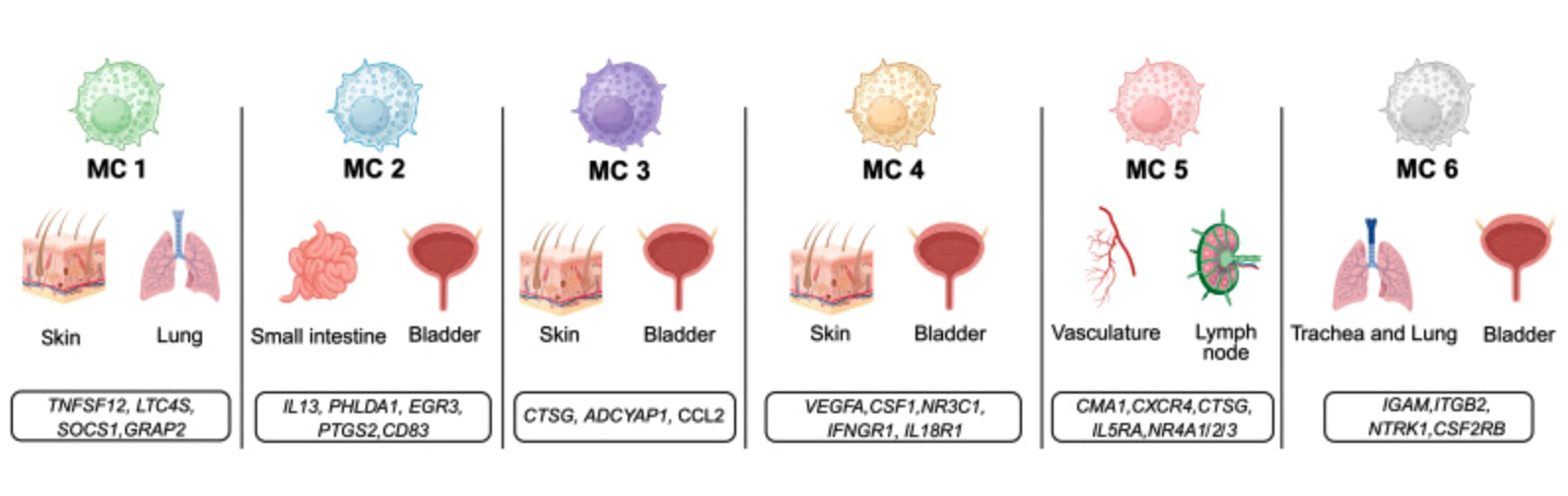
Dufour completed a sabbatical in the Mahajan Lab at Stanford University, where he completed this comprehensive review. Dufour and his colleagues detail the significance of mast cells beyond their traditional association with allergy and inflammation. They provide an overview of the evolutionary origins of mast cells, their diverse lineage and protease composition, and how their functionality varies between individuals and tissues. Notably, the review emphasizes the heterogeneity of mast cells in human tissues, which shapes their unique functional capabilities in physiological and pathological contexts.
Mahajan explained that in the context of ocular health, mast cells can be found in the conjunctiva, cornea, and other eye tissues, where they release inflammatory mediators such as histamine, cytokines, and proteases. This secretory activity is critical in managing ocular defense mechanisms, but it can also contribute to pathological conditions when dysregulated. Research has suggested that mast cells may be involved in the pathogenesis of various diseases, including allergic conjunctivitis, corneal inflammation, and other disorders related to retinal degeneration.
The authors also propose advanced techniques such as multi-omics approaches to better understand the intricate signaling networks that mast cells engage in, stressing the need for precision-targeted therapeutic strategies that could influence mast cell activity without compromising their protective roles.
Dufour and his team's work ultimately marks an important resource for the field, illustrating how a deeper understanding of mast cell biology can inform the development of innovative therapies aimed at treating a wide range of diseases
Mahajan added, “This comprehensive review serves as both a foundational piece for future studies and a call to rethink our approach to targeting mast cells in various disease states.”