
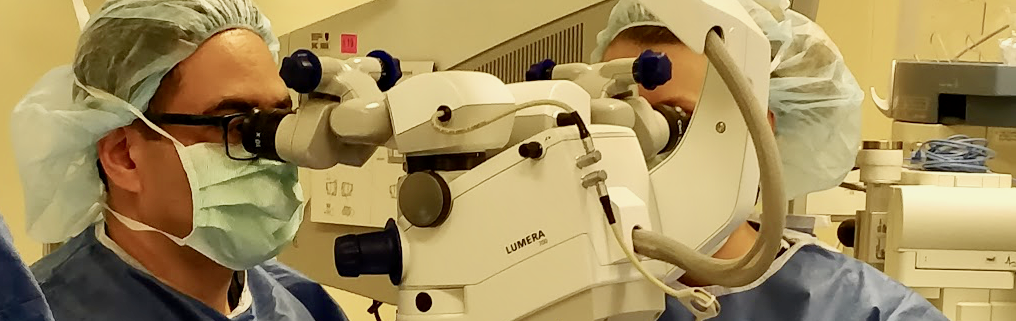
Palo Alto, CA – A new study from researchers at Stanford University and the Center for Advanced Surgical Exploration (CaseX) provides compelling evidence that complex eye surgeries can be performed safely and effectively in a specialized office setting, a significant shift from the traditional hospital or ambulatory surgery center model.
Vinit B. Mahajan M.D., Ph.D., professor of ophthalmology and vice chair for research at Stanford University's Byers Eye Institute, emphasized the study is about using data to find better ways to serve patients.
"As clinician-scientists, our goal is to use data to safely evolve patient care," said Dr. Mahajan. "This study provides evidence that challenges the traditional 'one-size-fits-all' approach to surgery."
He added, "The ‘how’ of retina surgery has evolved dramatically over the years: our instruments are better, cases are faster, and we use less anesthesia. But the ‘where’ of performing surgery has largely lagged. This work shows we can finally align the surgical setting with the modern advancements of the surgery itself."
The study, which documented 173 consecutive vitreoretinal procedures, was conducted at a facility founded by the paper's senior author, David Almeida, MD, MBA, PhD, DABO, FRCSC, FASRS, who also serves as its CEO. He explained the core vision behind the concept.
"We envisioned a space where we could deliver the most advanced surgical care with the same rigor and safety as a hospital but in an environment designed entirely around the patient's comfort and convenience," Dr. Almeida stated. "It’s about de-institutionalizing surgery without compromising on quality or safety."
The findings showed no serious complications, such as anesthesia-related events or postoperative infections, with surgical outcomes that were comparable to national benchmarks.
The authors credit their success to a strict, multi-faceted approach. A key factor was a rigorous patient selection process, ensuring that only healthy, low-risk patients were chosen. Furthermore, the surgical suite is not a typical examination room but a facility fully accredited by The Joint Commission, adhering to identical standards as top hospitals. The model also relies on an anesthesia protocol that uses minimal oral sedation and local anesthetics to maintain patient comfort while avoiding the greater risks associated with general anesthesia.
The researchers emphasize that this model is not intended to replace hospitals but to complement them, creating a tiered surgical ecosystem. This approach allows lower-risk procedures to be performed more efficiently, preserving critical hospital resources for higher-risk patients.