
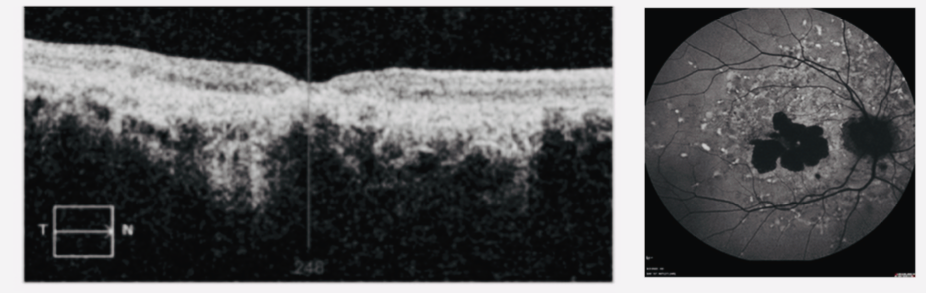
Palo Alto, CA — A groundbreaking clinical study has provided new hope for patients living with Stargardt disease, a rare genetic eye disorder that typically affects the central part of the retina, leading to severe vision loss and eventual blindness in children and young adults.
The STARLIGHT trial tested an innovative optogenetic therapy called MCO-010 designed to help advanced Stargardt patients regain some level of visual function.
Vinit Mahajan M.D., Ph.D., professor and vice chair of ophthalmology research at Stanford University and study co-author, said, “Traditional treatments for advanced Stargardt disease have not been successful, but MCO-010 takes a new approach: it reprograms surviving retinal cells to act like the light-sensitive photoreceptors, bypassing the damaged photoreceptors. For patients who previously had no effective treatment options, this breakthrough represents a meaningful step forward.”
The STARLIGHT trial followed patients for nearly a year, documenting improvements in visual sensitivity and stability of retinal structure. While not a cure, the therapy slowed disease progression and, in some cases, improved patients’ ability to perceive light and contrast. These gains could help people with Stargardt disease maintain greater independence in daily life, such as reading or navigating environments more safely.
"Seeing meaningful improvements in visual acuity in patients who were facing inevitable decline is extremely encouraging,” said Dr. Samarendra K. Mohanty Ph.D., the senior author of the study. “Our results show that optogenetic therapy can potentially improve the lives of patients who until now had no options.”
This study builds on growing momentum in the field. A recent Molecular Therapy publication by Mohanty and Mahajan, “A synthetic opsin restores vision in patients with severe RD,” demonstrated how a lab-engineered opsin protein overcame the loss of naturally occurring opsins to become a powerful therapeutic for retinal degeneration. Together, these findings highlight how advances in synthetic and optogenetic therapies are opening new doors for patients with blinding eye diseases.
Mahajan emphasized the importance of this progress: “This is just the beginning. As we refine the therapy, I hope there will be even stronger benefits for patients, giving them not just more years of sight, but a better quality of life.”
The STARLIGHT trial was sponsored by Nanoscope Therapeutics, a biotechnology company that develops gene therapies for inherited retinal diseases. Nanoscope focuses on optogenetic approaches to restore vision for advanced retinal degeneration patients, aiming to translate cutting-edge science into meaningful therapies that can transform lives.