
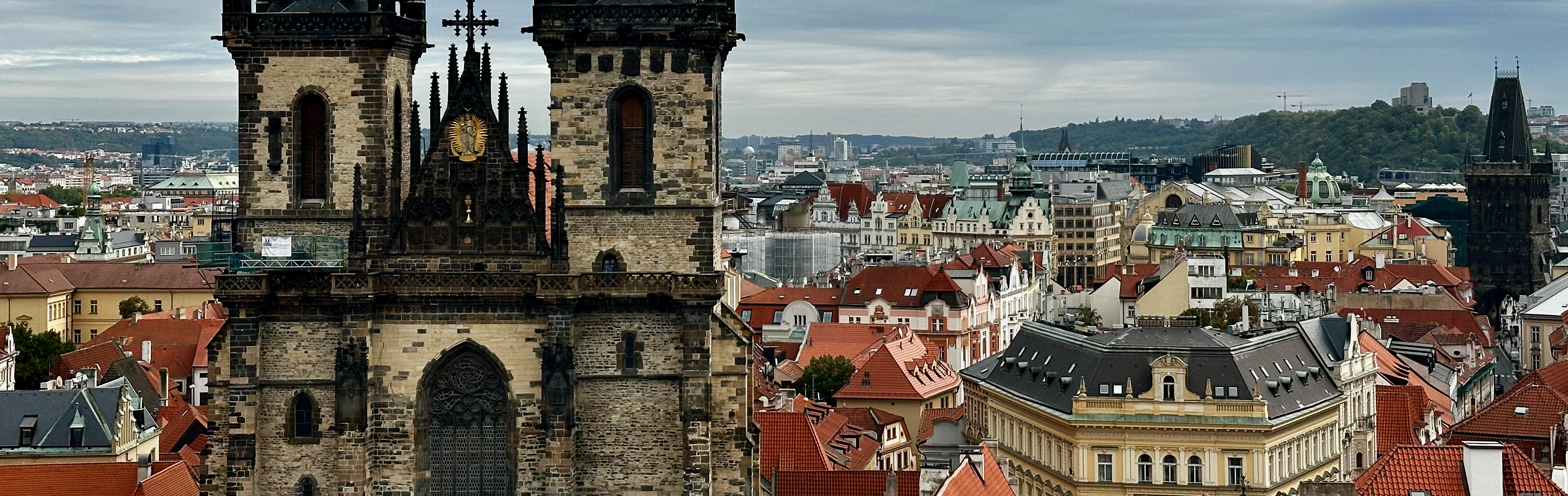
Prague, Czech Republic — In mid-September, the cobbled streets of Prague were filled not just with tourists but with some of the world’s top eye researchers. They gathered for RD2025, the international symposium on retinal degeneration, a biennial meeting devoted to understanding and ultimately preventing blindness. For five days, inside the Clarion Congress Hotel, the talk was of genes, cells, and vision but also of hope.
Vinit Mahajan M.D., Ph.D., Stanford professor and vice chair of ophthalmology research, gave a keynote address titled “A proteomic approach to decoding eye disease in living humans.”
He explained how TEMPO, his lab’s multi-omics AI platform that traces the expression of thousands of proteins in human eye fluid, can identify cellular mechanisms of disease, enhancing diagnosis, optimizing clinical trials, and determining the interplay between aging and disease.
Mahajan described how these new research tools are uncovering protein signatures and molecular signals that reveal hidden patterns that drive retinal degeneration. By connecting these molecular fingerprints to patients’ symptoms, Mahajan painted a future where treatments could be tailored with pinpoint precision.
“The code of blindness is written in thousands of protein molecules,” he told the audience, “And now, for the first time, we can read it.” His words set the tone for the meeting, underscoring the power of technology to unlock mysteries once thought unsolvable.
Other keynote speakers carried that same momentum forward. Harvard’s Dr. Rachel Huckfeldt M.D. Ph.D. shared progress from gene therapy trials while articulating new trial designs for inherited blindness. Indiana University’s Dr. Donald Miller transported the audience deep into the living eye, using adaptive optics and advanced imaging to reveal single cells in the retina. And Pittsburgh’s Dr. Leah Byrne introduced experimental approaches for viral vector optimization and gene editing and optogenetics, technologies that could one day reawaken sight in those who have lost it.
“This is among the very best conferences I have attended”, Mahajan said. “The in depth 30-minute talks, posters, and discussion were incredibly informative. The small meeting size and shared meals over five days allowed for informal conversations with luminaries in the vision community. And financial support from the National Eye Institute, Foundation Fighting Blindness, and the Bright Focus Foundation brought graduate students and postdoctoral fellows to the meeting who energized the whole event.”
The conference was also an opportunity for early-career scientists to present research in evening poster sessions. Scientists from across the globe shared findings and found opportunities for collaborations, setting the stage for a new generation of scientific break throughs.
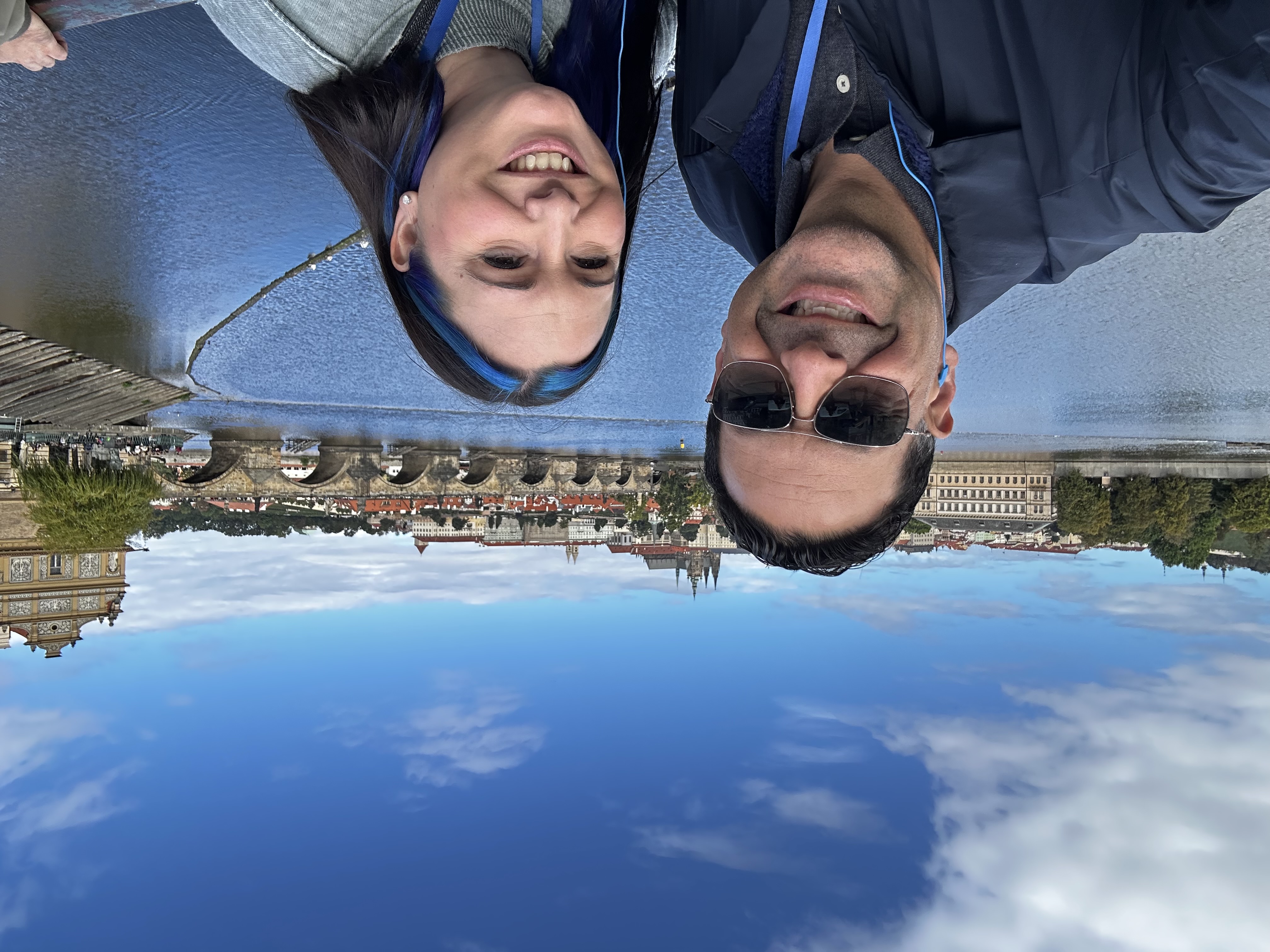
At the meeting, Mahajan had the opportunity to catch up with his former post-doctoral fellow, Katherine Wert Ph.D., now an assistant professor at UT Southwestern Medical School.
Mahajan said, “It’s rewarding to see one of my trainees presenting research that could lead to important breakthroughs in eye disease. Her work using retinal organoids, gene therapy, and genome engineering to tackle inherited photoreceptor degeneration is cutting edge.”
Midweek, attendees traded the lecture halls for Prague’s winding streets and medieval architecture, joining small group guided tours through the Old Town, the castle district, and the historic Jewish Quarter.
Despite the sobering reality that many retinal diseases still have no cure, the mood of the conference was strikingly optimistic. Liquid biopsies are revealing protein signatures in eye tissues that can’t be biopsied. Gene therapies are moving into human trials. Imaging tools are sharper than ever. And international partnerships are flourishing.
Mahajan said, “The path to preventing blindness is not a distant dream. At this meeting, it felt closer than ever.”
The 21st International Symposium on Retinal Degeneration “RD2025” was organized by Eric Pierce, John Ash, Florian Sennlaub, Sarah Doyle, Robert E. Anderson, Catherine Bowes Rickman, Joe G. Hollyfield, Jacque Duncan, and Christian Grimm.