
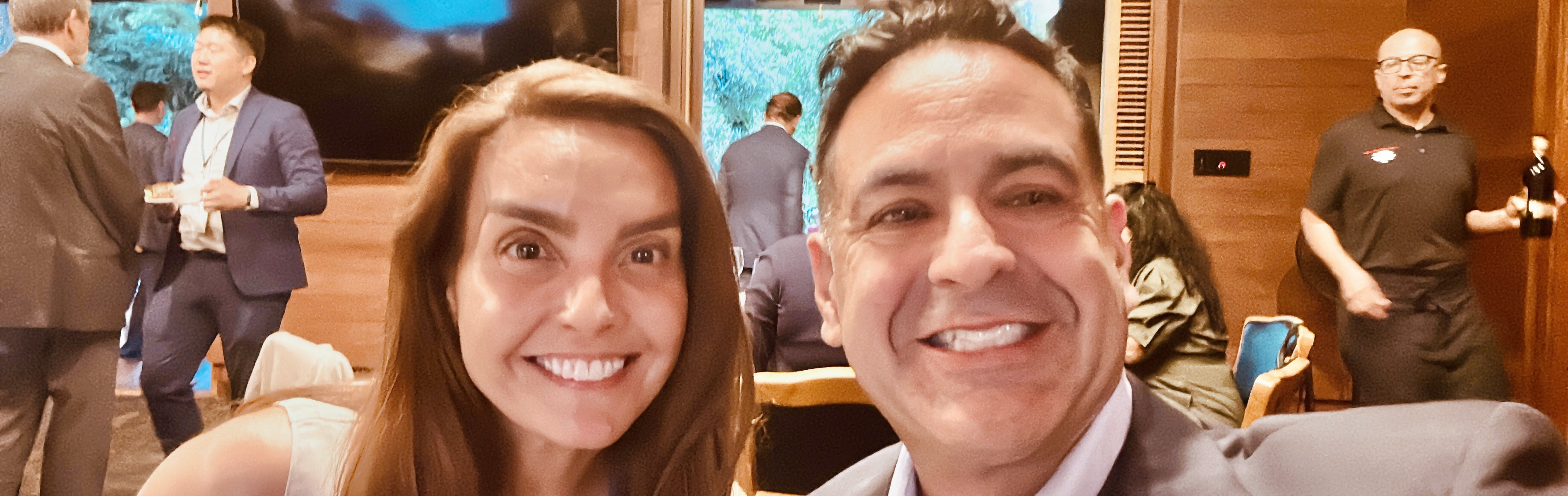
Palo Alto, CA — Leading doctors, inventors, investors, and students gathered for the 10th annual Ophthalmic Innovation Symposium and Workshop held at the Li Ka Shing Center on the Stanford campus. Organized by the Collaborative Community on Ophthalmic Innovation (CCOI) in partnership with the Stanford Mussallem Center for Biodesign and UCSF, the event brought together nearly 200 experts and future professionals to accelerate the development of technologies that prevent blindness.
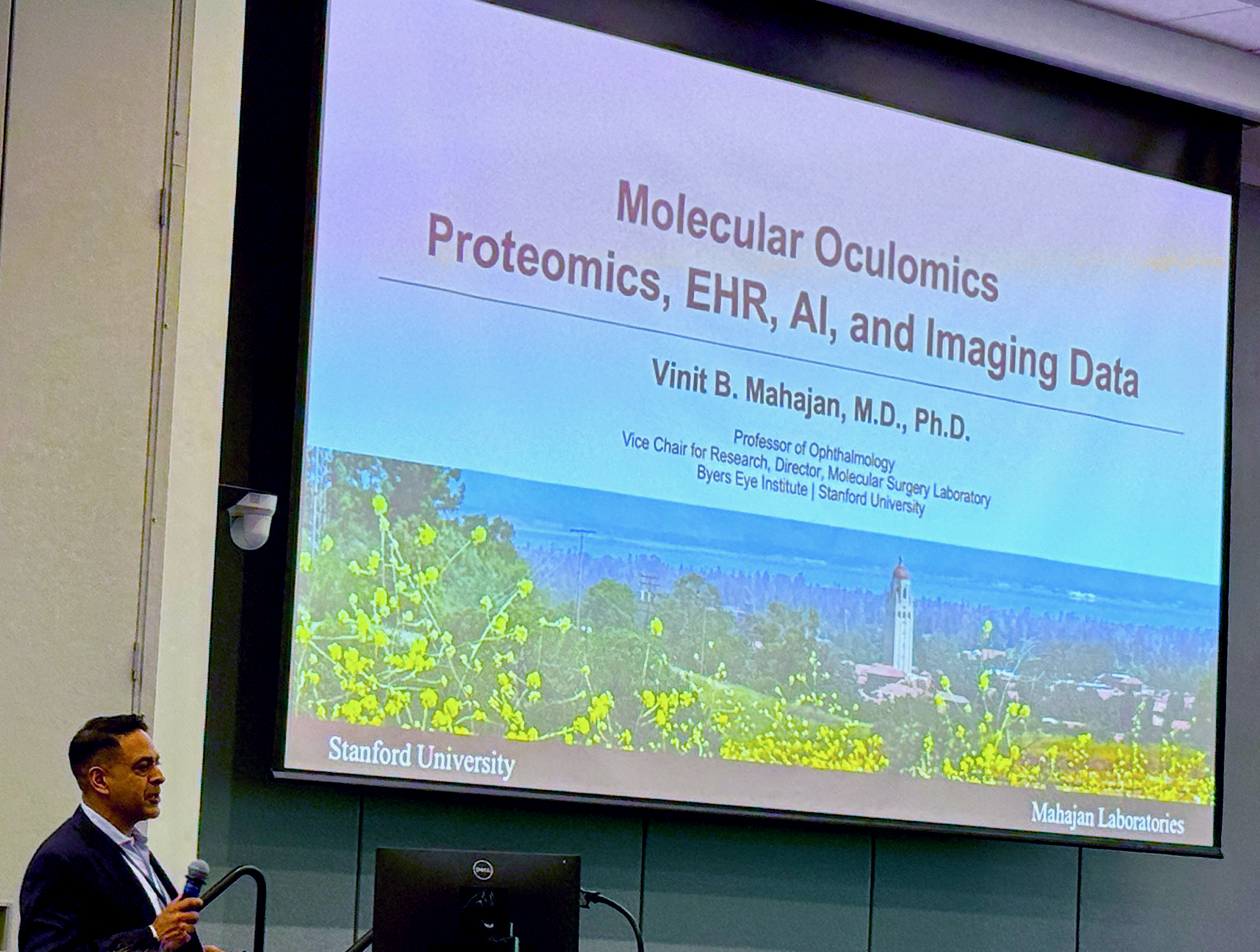
Vinit Mahajan, MD, PhD, Stanford professor and vice chair for research in the department of ophthalmology, said, “I was proud to take part in this year’s conference. I spoke about our lab’s work in molecular oculomics, and I came away inspired by the outstanding innovation on display.”
Global leaders in ophthalmology, medical device creators, biopharma representatives, venture capitalists, and patient advocacy groups learned how new devices, creative surgical solutions, and advanced technologies are shaping a future where fewer people will face blindness. The event was also designed to be open and accessible, welcoming students, community members, and anyone interested in healthy vision.
Dr. Mahajan’s research focuses on the molecular diagnosis and treatment of vitreoretinal diseases, including diabetic retinopathy, age-related macular degeneration, and genetic eye disease. Advances from his laboratory include methods for identifying disease-causing proteins in common eye diseases, and his team is now extending that research to brain diseases such as Parkinson’s.
Oculomics uses advanced analysis of the eye to detect early signs of both eye disease and systemic conditions such as diabetes and cardiovascular disease, work that until now has relied largely on imaging the eye. Dr. Mahajan’s laboratory is pioneering a new approach, an area he calls molecular oculomics, which measures proteins in eye fluid and links them to disease in the brain. His team found that the protein makeup of eye fluid overlaps roughly 85 percent with cerebrospinal fluid, the fluid that surrounds the brain and spinal cord.
“This means the molecules inside the eye can tell us what is happening inside the brain,” Dr. Mahajan said. “Oculomics is no longer only about imaging. We can now get at the molecular picture by taking a small sample of fluid from the eye, and it is far easier on a patient than a spinal tap. That matters a great deal for developing drugs for brain disease, for measuring whether those drugs are working, and for the patients enrolled in clinical trials.”
The symposium was co-directed by David Myung, MD, PhD, Stanford professor and co-director of the Ophthalmic Innovation Program at the Byers Eye Institute. Dr. Myung is an accomplished physician-scientist whose research focuses on advanced drug delivery systems, diagnostics, and tissue engineering for blindness prevention. “We’re excited to celebrate our tenth anniversary,” Dr. Myung said. “And we’re especially proud of the fellows who have come through the Stanford Ophthalmic Innovation Program and are making an impact on eye care through innovation.”
The symposium was anchored by the Stanford Ophthalmic Innovation Program, which trains physicians, engineers, and entrepreneurs to develop medical devices, diagnostics, and therapies, and connects trainees with leaders in academia and industry. This year’s agenda expanded to include keynote addresses, panel discussions, and hands-on workshops built around unmet needs in eye care, clinical adoption, and regulatory and reimbursement strategies.
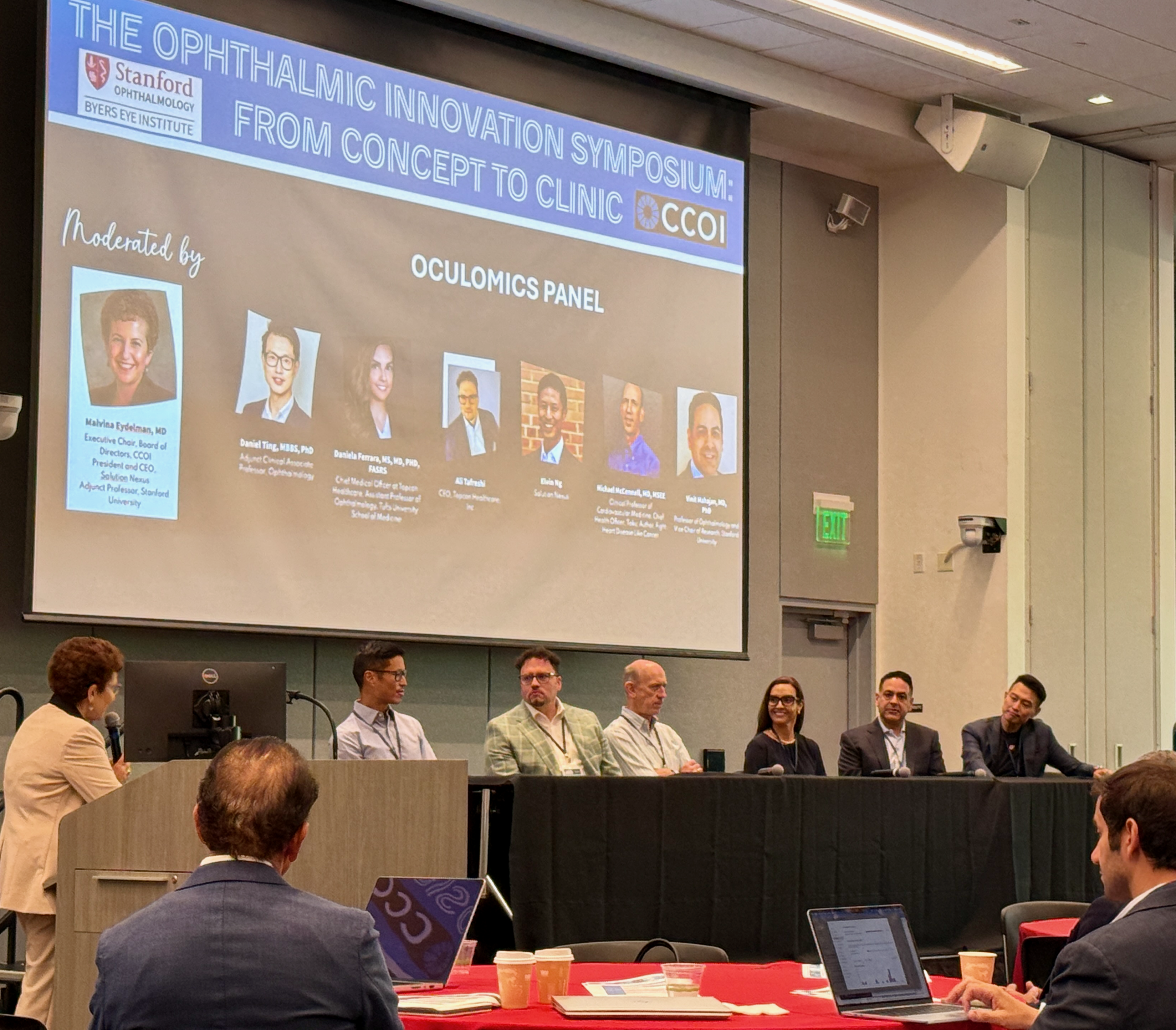
A highlight of the event was a CCOI oculomics panel featuring Dr. Mahajan; Ali Tafreshi, MD, chief executive officer of Topcon Healthcare; Daniela Ferrara, MS, MD, PhD, FASRS, chief medical officer of Topcon Healthcare; and Michael McConnell, MD, MSEE, chief health officer at Toku. The panelists discussed how their research leverages artificial intelligence and high-resolution imaging to reveal important health information from the eye, offering a non-invasive window into overall health and opening exciting possibilities for earlier diagnosis and more personalized care.
Panel moderator Malvina Edelman, MD, chief executive officer of CCOI, pointed out that Dr. Mahajan was among a group of specialists who led the CCOI Oculomics Work Group, which brought together global experts to create the START Framework — a set of standardized terms, application scenarios, and regulatory considerations for translational oculomics. The group will convene an international meeting in Hong Kong in October 2026.
Dr. Edelman asked Dr. Mahajan, “What sets the START Framework apart, and what are the next steps for advancing the field?”
Dr. Mahajan responded, “What sets the START Framework apart is that it brings together experts from both academia and industry to build a consensus that can help guide the FDA. When everyone contributes and the guidance is clear, we can accelerate product development and approval. Working as a team within a framework like this is what will ultimately get new diagnostics and therapeutics to patients faster.”