
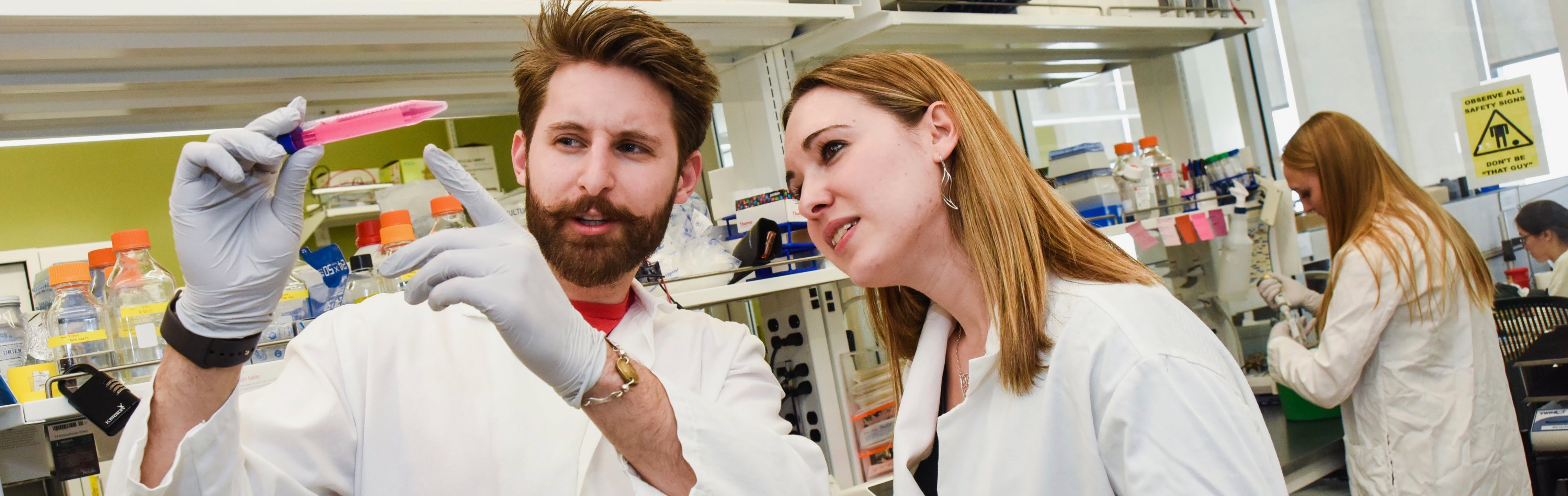
Palo Alto, CA — Former postdoctoral fellow in the Mahajan Lab, Katherine J. Wert, Ph.D., now an assistant professor at UT Southwestern Medical Center, has received two NIH R01 grants to support her independent research program in vision science.
“Katie’s success is a testament to her intellectual rigor, creativity, and commitment to translational science,” said Vinit Mahajan M.D., Ph.D., professor of ophthalmology and vice chair for research at Stanford University.
“During her time in our lab”, Mahajan said, “Katie was an exceptional scientist and highly skilled in mouse modeling, consistently asking meaningful questions and pursuing them with technical excellence and curiosity. It is incredibly rewarding to see her build an independent research program that continues to push the field of retinal biology forward.”
Wert joined the Mahajan Lab in 2017 as a postdoctoral fellow, beginning a period of intensive training at the intersection of molecular biology, metabolism, and translational vision science. She developed a research program focused on identifying molecular strategies to slow or prevent retinal neurodegeneration, with a particular emphasis on clinically actionable therapeutic approaches.
Among projects that included genetic retinal disease and development, Wert led innovative studies combining oral α-ketoglutarate–based metabolite therapy with advanced liquid biopsy proteomics to delay retinal degeneration.
By integrating the lab’s strengths in proteomics with her deep expertise in in vivo animal modeling, she helped establish a framework for using systemic metabolic interventions guided by molecular biomarkers. This work culminated in a landmark publication in the Lancet’s journal EBioMedicine, “Metabolite therapy guided by liquid biopsy proteomics delays retinal neurodegeneration,” which demonstrated the potential of metabolite-based therapies to slow disease progression in retinal degeneration models.
Mahajan said, “Katie’s ability to integrate rigorous animal modeling with systems-level proteomics made her work in our lab both innovative and highly impactful.”
Since completing her postdoctoral training, Wert has established an independent laboratory at UT Southwestern Medical Center where her research continues to explore fundamental mechanisms governing photoreceptor survival.
Mahajan said, ““I have known Katie since her PhD training in Nutrition at Columbia University, and she has always been an expert scientific writer and thinker. Winning one R01 is hard enough in today’s scientific climate. Receiving two R01s is remarkable!”
One of her NIH R01 awards supports investigations into Fic-mediated AMPylation, an understudied post-translational modification that may play a critical role in retinal protein homeostasis and stress responses. By defining how this pathway contributes to retinal health and disease, her work aims to uncover broadly applicable therapeutic targets. Her second R01 focuses on understanding how sex hormones and aging modify retinal degeneration, addressing a major source of clinical variability in inherited retinal disease. This research seeks to explain why individuals with the same genetic mutation can experience markedly different disease trajectories and may inform more personalized monitoring and treatment strategies.
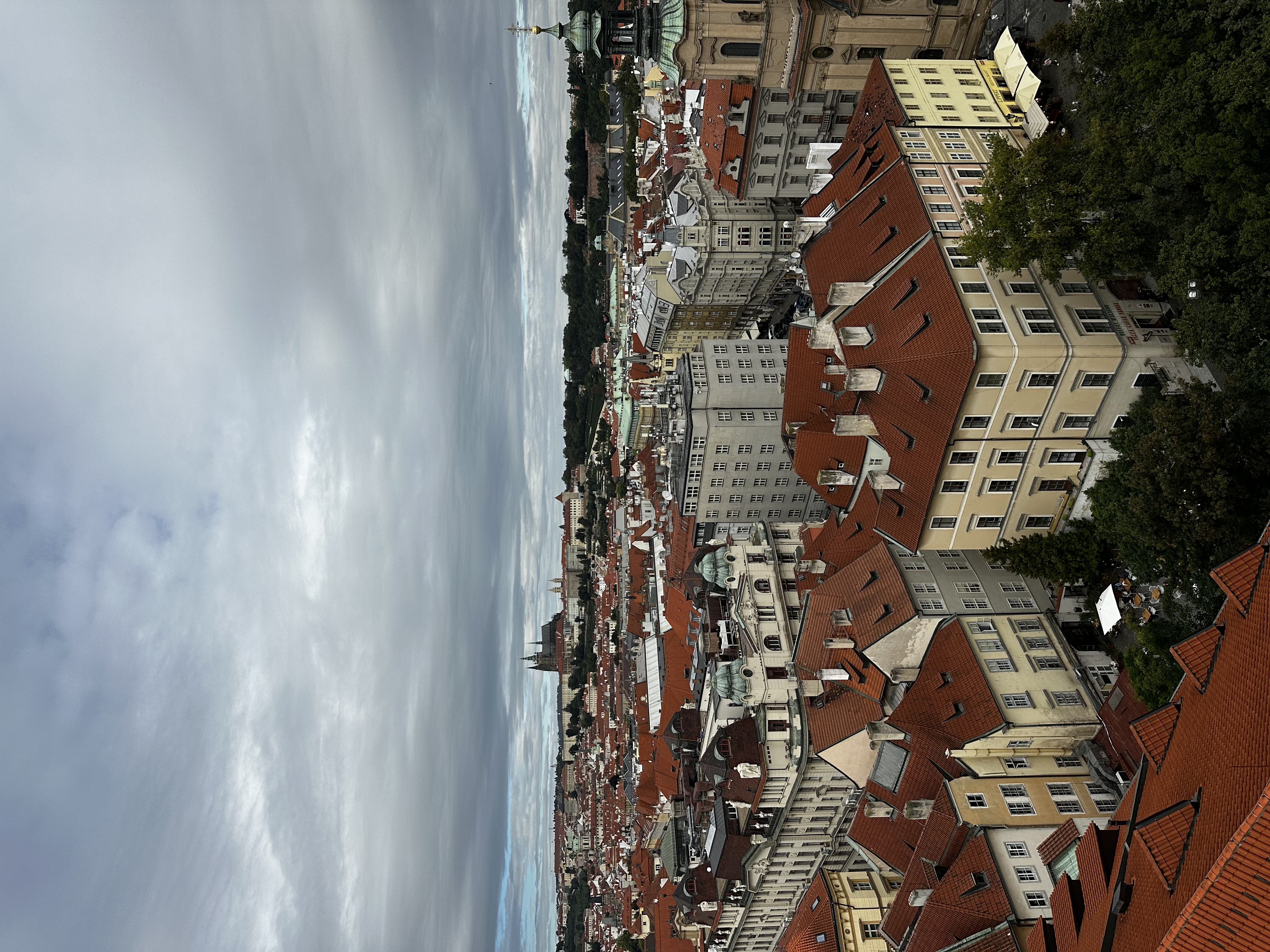
Recently, Mahajan and Wert had the opportunity to reconnect at the Retinal Degeneration 2025 meeting in Prague, where Mahajan gave a keynote lecture. They caught up while walking through the city’s winding cobblestone streets, historic bridges, and richly layered architecture. As always, the conversation moved easily between science and creativity, echoing the collaborative spirit that defined their work together in the lab.
Mahajan said, “Seeing Katie now, as a confident and creative scientific leader, is deeply gratifying. I am incredibly proud of her accomplishments and excited to follow her continued progress. She has the vision, rigor, and curiosity to make a lasting impact on our field, and I have no doubt her career will shape the future of retinal research in meaningful ways.”